Northern California is famous for its beautiful natural landscapes, from the redwood forests of Marin to the rolling vineyards of Sonoma and Napa. However, our lush vegetation, mild climate, and distinct architecture also create an ideal habitat for an invasive and destructive pest: the roof rat (Rattus rattus).
Unlike common field mice or burrowing sewer rats, roof rats spend their lives up high, traveling along tree canopies, fence lines, and rooflines. Because they are nocturnal and highly adept at hiding in insulated attics and ceiling voids, an infestation can grow significantly before you ever spot a live rodent. Recognizing the early warning signs of roof rats is critical to preventing extensive structural damage, electrical hazards, and health risks in your home.
What Makes Northern California Homes Targets?
Roof rats thrive in affluent residential areas throughout the Bay Area. Our properties often feature mature landscaping, fruit trees (such as citrus and plum), ivy ground cover, and dense oak canopies that provide an abundant food supply and secure pathways.
Additionally, many classic Northern California home designs—such as mid-century modern structures, Eichler homes, and rustic hillside builds—utilize open architectural rooflines, exposed beams, and vaulted ceilings. While visually stunning, these designs often present subtle gaps at construction junctions that roof rats can easily exploit to get inside.
The Top 5 Signs of a Roof Rat Infestation
If you suspect rats have moved into your upper floors or attic space, look for these five classic indicators of roof rat activity:
1. Nighttime Noises in the Ceiling
Because roof rats are nocturnal, they are active while you sleep. The most common early sign reported by homeowners is hearing scratching, scurrying, or faint squeaking noises coming from directly overhead between 10:00 PM and 5:00 AM. If you have vaulted ceilings with no attic space, you may hear them moving through the narrow insulation channels between your roof tongue-and-groove boards and the exterior roofing material.
2. Pointed, Dark Droppings
Finding rodent droppings is a definitive sign of an active problem. Roof rat droppings are distinct from mouse droppings; they are roughly 1/2-inch long, dark, and feature distinct, pointed ends (as opposed to blunt-ended Norway rat droppings). In Bay Area homes, these are most frequently discovered in attic storage areas, on top of water heaters, or along the top plates of crawl space foundations.
3. Grease Smudge Marks and Rub Tracks
Rats have poor eyesight and navigate by tracking along walls, beams, and pipes using their whiskers. Their fur contains natural oils and dirt that leave behind dark, greasy smudge marks along their frequent travel routes. If you see dark staining around roof vents, eave gaps, or where utility wires enter your siding, you are looking at a well-used rodent entrance.
4. Chewed Insulation and Damaged Wiring
Rats have incisor teeth that never stop growing, forcing them to chew on hard surfaces constantly to keep them filed down. Inside an attic, they will tear up fiberglass or cellulose insulation to build soft nests, causing a noticeable drop in your home’s energy efficiency. More dangerously, they frequently chew through flexible HVAC ducting and plastic protective coatings on electrical wiring, creating a serious hidden fire hazard.
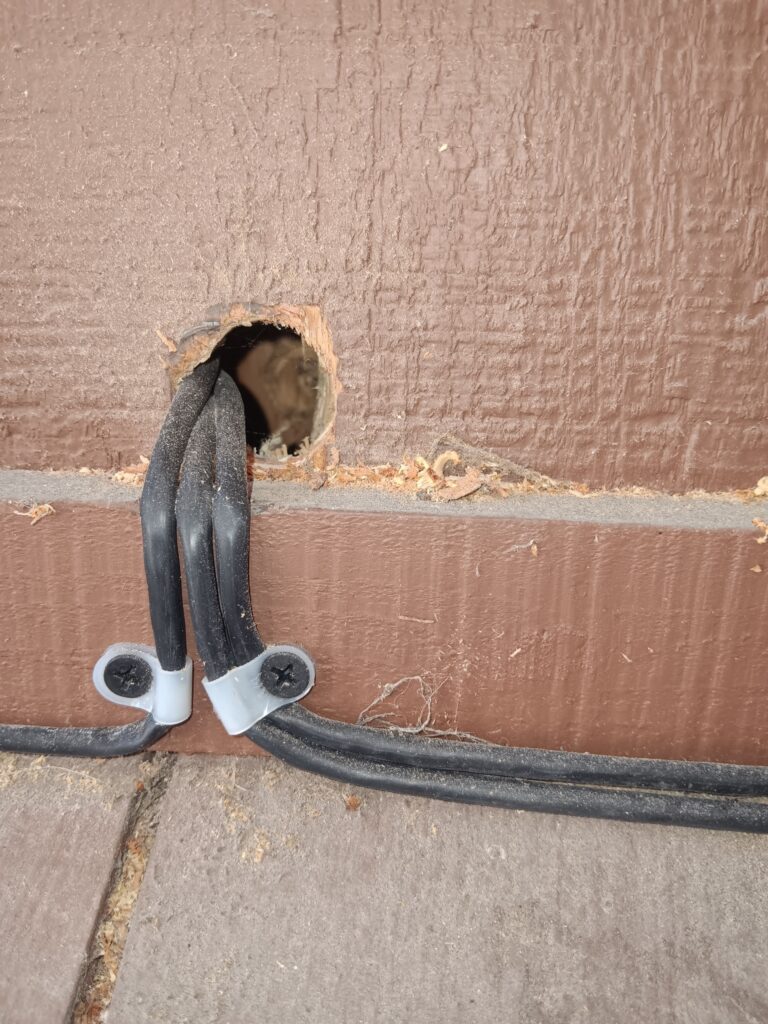
5. Damaged Fruit in Your Yard
Sometimes the first signs of a roof rat problem are found outside. If you have citrus trees, tomato plants, or fruit trees in your yard and notice fruit that has been hollowed out while still hanging on the branch, you are likely dealing with roof rats utilizing your yard as a primary feeding ground before nesting in your roofline.
Why Poison Baiting Is a Hazardous Mistake
Many traditional pest control companies attempt to manage roof rats by placing locked plastic bait stations filled with toxic rodenticides around the perimeter of your yard. This approach rarely solves a roof rat issue and frequently backfires for Northern California homeowners.
Because roof rats prefer to travel aerially, they may never descend to the ground to enter a bait station. If they do consume the poison, it takes several days to work. The poisoned rat will typically retreat to its safe nest inside your attic or interior wall voids to die. The resulting odor of a decomposing rat is intense, can last for weeks, and often requires invasive carpentry to locate and remove. Furthermore, secondary poisoning poses a major threat to our local ecosystem, accidentally killing beneficial predators like barn owls, red-tailed hawks, and domestic pets.
The Done Right Approach: Permanent Structural Exclusion
Done Right Rodent Proofing does things differently. We don’t believe in temporary fixes or ongoing poison contracts. We address the root cause of your roof rat problem by treating your home like a secure fortress.
Our comprehensive process begins with a meticulous roof-to-foundation inspection. We locate every potential entry point and seal it permanently using high-quality, construction-grade materials like heavy-gauge steel mesh screening, solid metal flashing, concrete, and lumber—materials roof rats cannot chew through. Once the structure is secured, we humanely trap and remove any remaining rodents using clean, mechanical snap-traps.
We back our permanent exclusion work with an industry-leading 3-year guarantee. Protect your home, your family, and local wildlife from the dangers of roof rats. Contact Done Right Rodent Proofing today for a professional, poison-free rodent inspection.